
If you’ve ever wondered how to make diy candle wicks, you’re not alone. Many beginners in candle making ask: Can I make my own wicks at home? What materials do I need? Will they burn properly with scented candles? Making your own wicks is easier than it sounds, and it gives you full control over the size, thickness, and style of your candle wicks.
Affiliate Disclosure: This article contains affiliate links which means we may earn a commission at no extra cost to you. You can check our affiliate disclosure page here.
This guide walks you step by step through diy candle wicks you can create at home for any container or candle type.
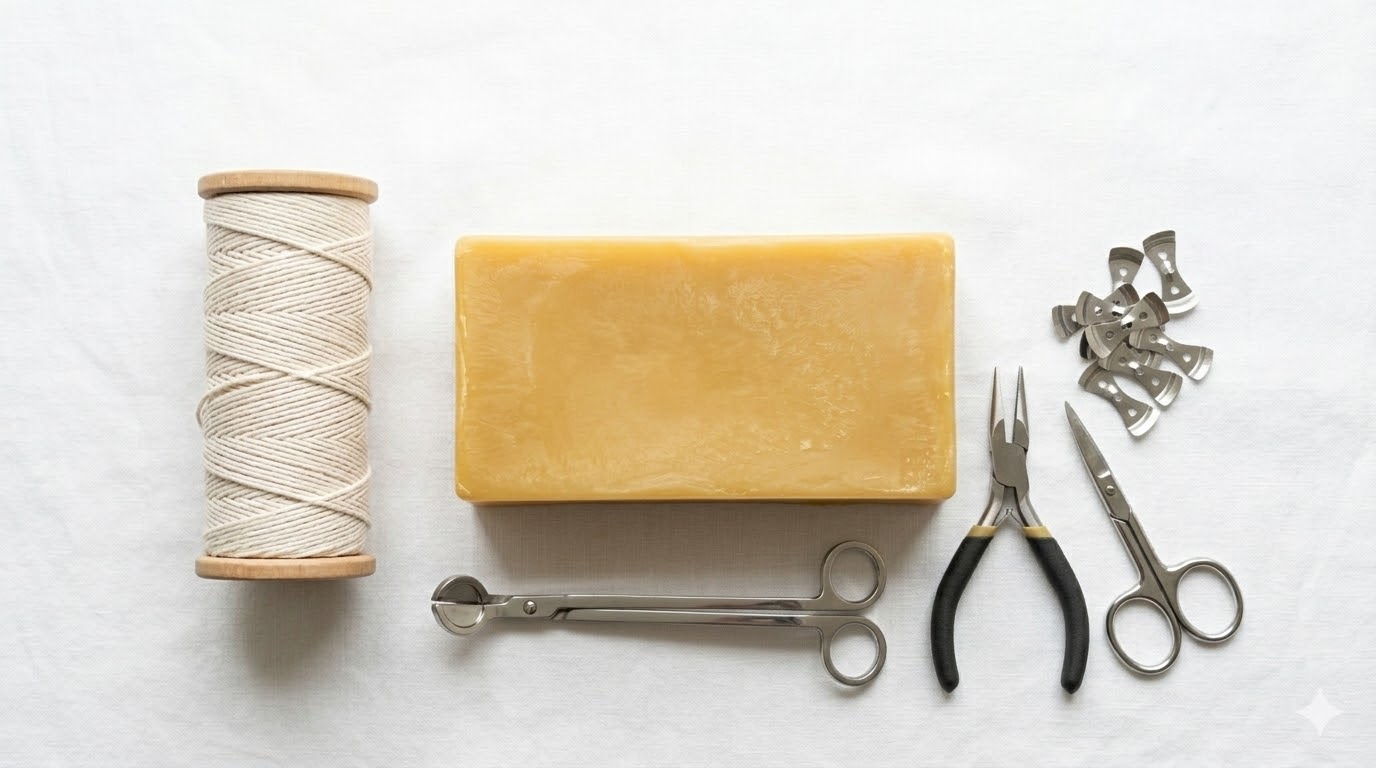
Materials You’ll Need
-
100% Cotton Twine or String
Natural cotton burns evenly and is safe for candles. Choose unbleached twine for a clean burn. -
Wax for Coating Wicks
You can use soy wax or beeswax to stiffen and prep the wick for burning. -
Wick Trimmers
For cutting your wick to the right length. -
Pliers
Optional, but helpful for twisting or handling wicks while coating. -
Double Boiler or Heatproof Bowl + Pot
To safely melt wax for dipping your homemade wicks. -
Optional Fragrance or Dye
Can lightly scent or color the wick for decorative purposes, especially in diy candle making.
Step-by-Step Instructions
1. Cut Your Twine
Measure and cut the cotton twine to slightly longer than your candle container. This ensures it sits properly once inserted.
2. Melt Wax
Using a double boiler, melt your wax until fully liquid. Keep the temperature around 160–175°F for soy or beeswax to prevent burning.
3. Dip the Twine
Hold the twine with pliers and dip it into the melted wax. Pull it out slowly and let excess wax drip back into the pot. Repeat 2–3 times for a sturdy coating.
4. Straighten and Dry
Lay the waxed wick flat on parchment paper or hang it between two sticks. Allow it to harden completely.
5. Optional Scent or Color
For decorative diy candle wicks, lightly brush with fragrance oil or dip in colored wax after the initial coat.
Related: DIY Candle Scents: Natural Alternatives to Fragrance Oils
6. Trim and Test
Trim the wick to the desired length and do a small test burn to make sure it lights easily and burns evenly with a container or scented candle.
Common Mistakes to Avoid
-
Using synthetic string – Produces toxic smoke.
-
Skipping wax coating – Wicks burn too fast or unevenly.
-
Making wicks too thick or thin – Causes poor burn or tunneling.
-
Overheating wax – Can make the wick brittle or sticky.
-
Not straightening wicks while drying – Leads to uneven burning.
Tips & Variations
-
Twist two thin cotton strands together for stronger wicks.
-
Use beeswax for a natural, slow-burning wick.
-
Wooden skewers or bamboo can serve as a base for novelty diy candle wicks.
-
Store prepared wicks in a dry, cool place until use.
-
Experiment with wick size depending on your candle container diameter.
Safety & Best Practices
-
Always supervise melted wax to prevent burns or fire hazards.
-
Work on a non-flammable surface.
-
Keep flammable materials away while dipping and drying wicks.
-
Test new wicks in small candle batches before larger use.
-
Trim wicks before each burn for a cleaner flame.
Making diy candle wicks gives you control over your candle’s burn quality and makes your diy candle making truly customizable. Once you master this, you can pair your wicks with scented candles, container candles, or even create gift-ready candle sets.
- How to Make Candles at Home for Beginners
- DIY Candle Dyes: How to Color Your Candles Without Store-Bought Dyes
- How To Make Scented Candles at Home For Beginners
Frequently Asked Questions
1. Can I use any type of string for DIY candle wicks?
No. Always use 100% natural cotton twine. Synthetic materials like polyester or nylon produce toxic fumes and will not burn safely or consistently in a candle.
2. Why do I need to coat DIY wicks in wax?
Coating wicks in wax (priming) stiffens the cotton and removes air pockets. This ensures a steady, controlled flame and prevents the wick from burning up too quickly.
3. What happens if my DIY wick is too thin?
If the wick is too thin for the container’s diameter, the flame will be too small to melt the wax to the edges, causing “tunneling” and wasting your candle.
4. How many times should I dip my twine in wax?
Dipping 2–3 times is usually sufficient. You want the wick to be completely saturated and stiff enough to stand upright, but not so thick that it creates soot.
5. Can I scent my DIY candle wicks?
Yes. You can lightly brush the wick with fragrance oil after its final wax dip. This adds a subtle decorative touch, though the candle’s main scent comes from the wax.